
Bed bug infestations create stress, frustration, and property damage concerns. One overlooked but critical sign involves bed bug poop on wood surfaces. Tiny dark stains along bed frames, baseboards, wooden furniture, or flooring often signal active infestation long before live insects appear.
Recognizing early evidence protects home, furniture, and health. This comprehensive guide explains how bed bug fecal stains look, why they appear on wood, health implications, cleaning methods, prevention strategies, and professional treatment options. Information reflects pest control best practices and real-world inspection experience to ensure accuracy and trustworthiness.
Understanding Bed Bug Poop on Wood
Bed bug droppings consist primarily of digested blood. After feeding, insects excrete liquid waste that dries into dark brown or black spots. On wood, stains absorb quickly into porous grain, making removal challenging.
Unlike dirt or regular debris, bed bug feces often smear when wiped with damp cloth. That smear typically produces reddish-brown streak because droppings contain oxidized blood. This characteristic helps confirm presence of infestation.
Wood surfaces provide ideal hiding zones. Bed frames, headboards, nightstands, dressers, and hardwood flooring cracks create narrow crevices where insects shelter during daylight hours. Droppings accumulate near these harborages.
Read Also: MyFastBroker.com Stock Brokers Review & Guide
What Bed Bug Droppings Look Like on Wood
Color and Texture
Bed bug poop on wood appears as tiny ink-like dots. Color ranges from dark brown to deep black. Fresh droppings may look glossy before drying into matte finish.
Size resembles small pen tip mark. Clusters often form along seams, screw holes, joints, or rough grain patterns. Heavy infestations create larger blotches caused by repeated feeding cycles.
Smear Test for Confirmation
Dampen cotton swab lightly and rub suspected stain. If smear turns reddish-brown, evidence likely bed bug feces. Paint chips, mold, or dirt typically do not produce blood-like streaks.
However, smear test should occur carefully. Excess moisture may spread stain deeper into wood fibers.
Common Locations on Wooden Surfaces
Inspection should focus on wooden bed frames, slats, headboards, under mattress supports, behind wall-mounted wooden décor, along baseboards, inside drawer corners, and beneath wooden nightstands.
Bed bugs prefer areas within eight feet of sleeping location. Wood grain cracks offer protection from light and disturbance.
Why Bed Bugs Leave Poop on Wood
Bed bugs feed exclusively on blood, usually during nighttime hours. After feeding, insects retreat to hidden spaces. Digestion process leads to excretion near resting sites. Because wood absorbs liquid quickly, fecal spots remain visible long after insects move.
High humidity increases absorption rate. Rough unfinished wood traps droppings more easily than sealed or varnished surfaces. Painted wood may show surface stains rather than deep penetration.
Presence of droppings often indicates established colony rather than single insect. Frequent spotting suggests repeated feeding cycles and population growth.
Health Concerns Related to Bed Bug Droppings
Bed bug poop does not transmit disease directly according to current research. However, droppings contribute to indoor allergen load. Sensitive individuals may experience skin irritation, respiratory discomfort, or worsened asthma symptoms when infestation becomes severe.
Psychological stress represents additional concern. Discovering fecal evidence often triggers anxiety, sleep disruption, and emotional distress. Early intervention reduces prolonged exposure and mental strain.
While droppings themselves pose limited direct health risk, underlying infestation requires prompt attention to prevent escalation.
How to Remove Bed Bug Poop from Wood
Step One: Confirm Active Infestation
Before cleaning stains, determine whether infestation remains active. Look for live insects, shed skins, eggs, or additional fresh droppings. Cleaning alone will not eliminate source.
Consider professional inspection if uncertainty exists. Certified pest control technicians possess training and tools for accurate assessment.
Step Two: Surface Cleaning Methods
For sealed or varnished wood, gentle cleaning solution works effectively. Mix mild dish soap with warm water. Dampen microfiber cloth and blot stained area. Avoid excessive water saturation.
For stubborn stains, small amount of hydrogen peroxide may lighten mark. Test on hidden area first to prevent discoloration. Peroxide can bleach darker wood finishes.
On unfinished wood, removal becomes more difficult. Light sanding may reduce visible staining. Use fine-grit sandpaper and sand gently along grain direction. After sanding, wipe surface clean and consider applying sealant to prevent future absorption.
Step Three: Disinfection
After stain removal, apply appropriate disinfectant safe for wood surfaces. Ensure product label specifies compatibility. Avoid harsh chemicals causing finish damage.
Remember, cleaning addresses symptom rather than root problem. Active infestation demands comprehensive treatment plan.
Professional Treatment Options
Severe infestations require integrated pest management approach. Licensed pest control companies may use heat treatment, chemical applications, or combination strategies.
Heat treatment raises room temperature to lethal level for bed bugs across all life stages. This method penetrates furniture, mattresses, and wood crevices effectively.
Chemical treatment involves targeted insecticide application into cracks and crevices. Professionals select products approved for residential use and apply according to regulatory guidelines.
Selecting experienced, licensed provider ensures safety and effectiveness. Verify credentials, certifications, and treatment guarantees before hiring.
Preventing Bed Bug Poop on Wood Surfaces
Seal Cracks and Crevices
Apply caulk to baseboard gaps and repair loose joints in wooden furniture. Reducing hiding spaces limits harborage opportunities.
Use Mattress and Box Spring Encasements
High-quality encasements trap existing insects and prevent new ones from nesting inside mattress seams.
Inspect Secondhand Furniture
Carefully examine used wooden furniture before bringing into home. Look for dark spotting, shed skins, or musty odor. Avoid items with suspicious signs.
Maintain Regular Cleaning Routine
Vacuum along baseboards, under beds, and around furniture legs regularly. Dispose of vacuum contents immediately in sealed bag.
Travel Precautions
Inspect hotel beds, headboards, and nearby wooden furniture during travel. Keep luggage elevated on rack away from walls. Wash clothing in hot water after returning home.
Distinguishing Bed Bug Poop from Other Stains
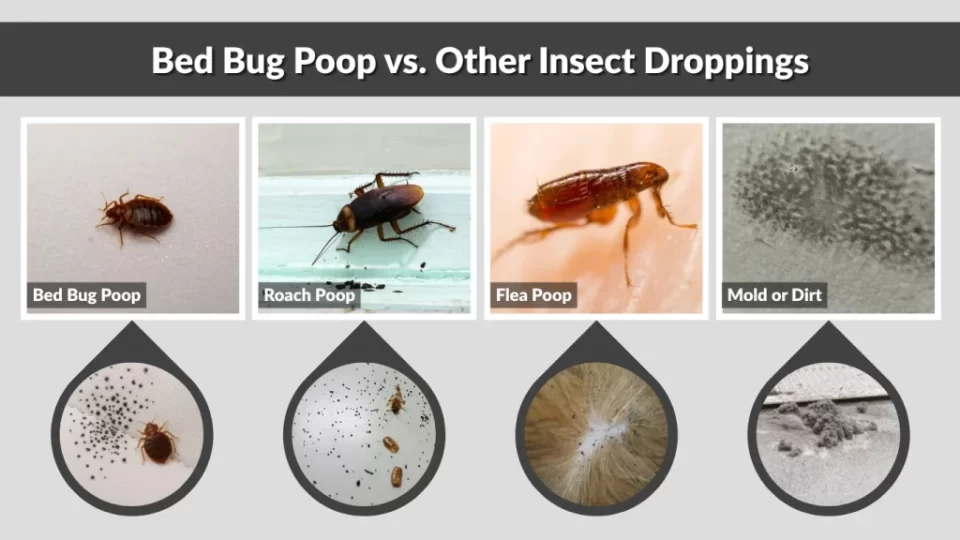
Wood surfaces may display marks caused by mold, cockroach droppings, or general wear. Mold often appears fuzzy or spreads in irregular patches. Cockroach droppings resemble pepper flakes rather than liquid stains.
Termite frass looks like tiny pellets rather than smeared ink spots. Careful observation combined with smear test improves identification accuracy.
If uncertainty persists, consult pest management professional for confirmation.
Long-Term Damage to Wood
Bed bug fecal stains rarely compromise structural integrity of wood. Damage remains cosmetic rather than structural. However, prolonged infestation may require furniture replacement due to staining, odor, and psychological discomfort.
Unfinished wood absorbs stains deeply, making restoration challenging. Sealing wooden furniture reduces future risk.
Early detection minimizes permanent staining and financial loss.
When to Call a Professional
Call licensed pest control provider when droppings appear in multiple rooms, live insects visible during daytime hours, bites increase in frequency, or DIY efforts fail.
Attempting to treat widespread infestation without training often leads to incomplete elimination and recurring outbreaks.
Professional intervention ensures comprehensive eradication and reduces long-term cost.
Expert Insight on Bed Bug Evidence
Years of pest control field experience confirm fecal spotting often appears before visible insects. Homeowners frequently mistake stains for dirt until infestation grows severe. Routine inspection of wooden bed frames and baseboards remains essential preventive measure.
EEAT principles emphasize accurate identification, safe cleaning practices, and reliance on licensed professionals for advanced treatment. Trustworthy guidance helps homeowners avoid misinformation and harmful DIY methods circulating online.
Conclusion
Bed bug poop on wood serves as early warning sign of infestation. Small black or brown ink-like spots along wooden bed frames, baseboards, and furniture joints should never be ignored. Quick identification followed by thorough inspection prevents widespread infestation.
Cleaning stains improves appearance, but eliminating source requires strategic approach. Combining vigilance, sanitation, sealing practices, and professional support when necessary ensures long-term protection.
Homeowners who act promptly often avoid major financial cost and emotional stress. Regular inspection of wooden surfaces near sleeping areas remains simple yet powerful defense against hidden infestations.
If suspicious stains appear, investigate immediately. Early action preserves furniture, safeguards comfort, and restores peace of mind.
FAQs
What does bed bug poop look like on wood?
Bed bug droppings appear as small dark brown or black ink-like dots that may smear reddish-brown when wiped with a damp cloth.
Can bed bug poop damage wood furniture?
Stains usually cause cosmetic damage rather than structural harm, but unfinished wood may absorb marks deeply.
How do I remove bed bug poop from wood?
Use mild soap and water for sealed wood. Light sanding may help on unfinished surfaces. Always confirm infestation is treated first.
Is bed bug poop dangerous to health?
Droppings do not spread diseases, but heavy infestations may trigger allergies or respiratory irritation in sensitive individuals.
Does finding poop mean I have an active infestation?
Not always, but multiple fresh dark stains near beds or furniture strongly suggest active bed bugs and require inspection.
